

A Small Symphony in an Open Field:
How Nature in Maumere' Reveals a Simple Face of Restoration?
This Account documents the ecological knowledge of local communities that has emerged from everyday land based practices. It shows that communities are not passive or unreliable actors in environmental management, but rather key agents of restoration, grounded in long experience, continuous observation, and long term relationships with nature. These self initiated and simple practices demonstrate that local approaches can provide a strong foundation for sustaining ecosystems and community well-being., [particularly at a time when restoration policies are increasingly centralized and designed through top down processes, in which decisions are made by central authorities or external institutions while local communities are positioned mainly as implementers rather than active participants in planning and decision making.
Many people imagine ecological restoration as a large scale project requiring heavy machinery, advanced technology, and substantial investment. In an open field in Maumere, however restoration takes a far quieter form, one that is deeply embedded in the daily lives of local people. Here, nature is forced to change. It is given space to change.
It is given space to work again.

Restoration That Moves Alongside Livestock
In this field goats and horses are released to forage freely. They feed on grasses and wild plants that grow without deliberate cultivation. This simple sctivity plays an important role in supporting the soil.
The livestock droppings left on the land naturally decompose and return in the soil as organic matter. This process can be understood as a form of circular bioeconomy at at local scale, in which resources available within the field are reused by natural processes without generating waste.
Soil enriched with organic matter is then used by the community to grow maize, with reduced reliance on synthetic fertilizers.
Soil That Sustains Itself
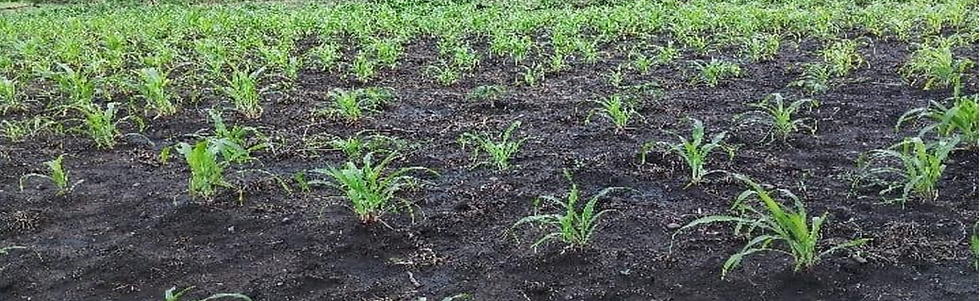
Organic Matter as the Foundation of Fertility
For local people, livestock manure is not something to be removed, but an integral part of the land's natural cycle. The gradual decomposition of organic material improves soil conditions over time.
Small Lives Beneath the Surface

Earthworms as Silent Workers
Beneath the surface, small forms of life continue their works. When the soil is loosened earthworms are often found.
Their presence helps improve soil structure, making the soil more porous and accelerating the decomposition of organic material. These processes enhanse that soil's ability to absorb and retain water, which is essential for crop growth in community farmland.
Birds Flying Low
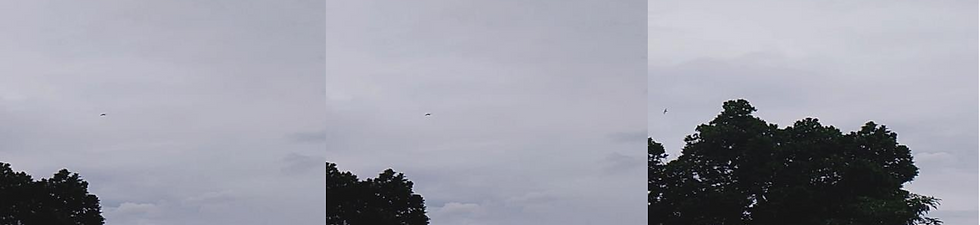
Natural Signs Before the Rain
Local people are also accustomed to observing the behavior of birds. When birds begin to fly lower than usual, elder often say that rain will arrive soon.
This knowledge is derived from long experience of living closely with nature. In general, changes in environmental conditions before rainfall can influence the activity of birds and the insects on which they feed. Under certain condition, birds tend to fly lower while foraging around open fields.
After the Rains, Insects Return

Butterflies and Wild Flowers
After the rain subsides, insect activity becomes visible again. One of the most easily observed insects is the butterfly, which reappears and rests on wild flowers, including dandelions growing among the grasses.
Biologically, butterflies require sunlight to become active after rainfall as their body temperature is strongly influenced by surrounding environmental conditions. At the same time, many flowers recover quickly after rain and provide fresh nectar as a good food source. For these reasons, butterflies are often more active once the rain has stopped.
Pollinators as Signs of a Healthy Field

Green Infrastructure at a Small Scale
The presence of butterflies indicates that this field still provides suitable habitat for pollinating insects. Pollinators play an essential role in supporting the reproduction of wild plants and crops around community gardens.
In the broader context of ecosystem restoration, which is also a growing concern of the European Union, pollinating insects are regarded as one of the key indicators of environmental health. Allowing wild plants to grow between cultivated plots can therefore be understood as a form of small scale green infrastructure spaces that enable insects to move, feed, and reproduce.
A small symphony in One Field
Interconnected Ecological Processes
What takes place in this open field may appear modest. Yet a series of simple processes, goats and horses foraging naturally, soils enriched with organic matter, earthworms improving soil structure, active birds and insects, and butterflies supporting pollination form an interconnected ecological system
These practices resonate with the spirit of the EU Nature Restoration Law, which emphasizes the recovery of ecosystem functions and the protection of biodiversity, rather than focusing solely on short term productively
Conclusion
For the people of Maumere, none of this described as an international policy framework or global agenda. It is a way of living shaped by necessity, experience, and close relationship with our land.
Here, restoration finds its simplest meaning, keeping the soil alive, allowing goats and horses to forage freely, welcoming the return of butterflies after the rain, and sustaining the natural relationship between people and the environment on which their lives depend.