

Author: Marissa Ananias
Mixed Gardens: Local Knowledge from the Land of Flores


In many villages across Flores, including those around Maumere, gardens rarely look like neatly arranges fields planted in orderly rows. From a distance, these gardens often resemble small forests growing naturally.
However, for the local communities, this seemingly irregular appearance actually reflects a form of local knowledge that has been passed down through generations. This system is known as a mixed garden, way of planting various types of crops within the same space so that they support and sustain one another.
This knowledge emerged from the community's long experience in reading seasonal patterns, understanding the soil, and adapting crops to meet household food needs. Rainfall in Flores is not always stable. The dry season can last quite long, while the rainy season sometimes arrives unpredictably. Under such conditions, planting only a singe crop can be very risky. For this reason, communities developed a layered planting system that keeps their gardens productive throughout the year.
The Upper Layer: Nature's Protective Canopy

Mango tree and jackfruit tree
The first layer consists of tall trees, such as mango and jackfruit. These trees have deep roots that allow them to draw water from deeper layers of soil when the surface begins to dry out.
Their wide canopies function like natural umbrellas. protecting the soil below from excessive heat. Fallen leaves are left to decompose on the ground, gradually turning into natural fertilizer that nourishes the entire garden.
The Middle Layer: Guardians of Resilience
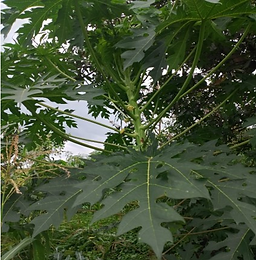


Papaya tree, banana tree, and sugar apple tree
Under the shade of larger trees grow medium sized plants, such as papaya, banana and sugar apple. These plants are not very tail, but they are strong enough to grow alongside larger trees. Their fruit provide a daily source of food that families can easily harvest.


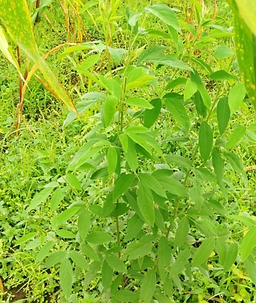
Wuek beans (pigeon peas)
IN this layer also grows Wuek, the local name for pigeon pea, a crop well known for its remarkable tolerance to drought. For the people of Maumere, Wuek is often considered an important pillar of food security, because it continues to grow even during long dry seasons. In addition to producing edible seeds, the plant's roots also help improve soil fertility naturally.

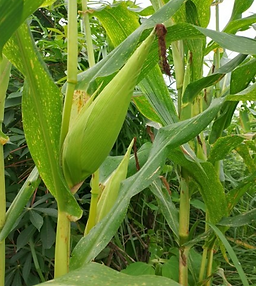
Maize plants
In addition, maize is planted during the rainy season and serves as one of the community'
staple food sources. Maize grows by adapting to the spaces between trees and forms an important part of the mixed garden system.
Shrubs and Climbing Plants: Making Use of Space

Basil plant
Between the main crops, various smaller plants make use of the remaining space. Basil grows with its distinctive aroma. In the garden, basil acts as a kind of natural aromatic barrier. Its strong scent is disliked by certain insects and caterpillars, helping to protect nearby plants without the need for chemical pesticides.

Bird's eye chili plant
In some parts of the garden, communities also plant bird's eye chili. This plant usually grows in areas that receive sufficient sunlight. Bird's eye chili is an important crop because almost every household dish requires a spicy flavor.

Moringa tree
Around the garden or near the house, moringa trees are also commonly found. Moring leaves are an important vegetable in the daily cuisine of the people of Flores. The leaves are often cooked in clear soups or mixed into various traditional dishes and are well known for their high nutritional value and heath benefits.

Lime tree
In the corner of the garden, one may also find lime trees, whose fruits are used as natural seasoning in many dishes, especially fish based meals.

Wewe beans (cowpeas)
Meanshile, Wewe, the local name for cowpea, slowly climbs maize stalks or tree branches as support.

Pumpkin
At ground level, creeping plants, such as pumpkin help cover the soil, reducing water evaporation nd suppressing weed growth.

Yellow taro and cassava
Beneath the soil lies a reserve of food crops in the form of tubers, such as yellow taro and
cassava. These crops are often considered a family's food savings because they can be harvested whenever they are needed.

Temulawak plant (Javanese turmeric)
In addition, to tubers, communities also grow rhizome plants such as, temulawak (Javanese turmeric). This plant is used not only as a cooking spice but also as a traditional herbal remedy, believed to support health.
From Garden to Dining Table
Mixed gardens are not only an agricultural system, they are also closely connected to the kitchen and local culture.

Lurun Mage (sour fish soup from Maumere)
Freshly picked basil from the garden often accompanies dishes such as, Lurun Mage, a sour fish soup typical of Maumere. The dish is usually served with a spicy sambal made from fresh bird's eye chili and a squeeze of lime.
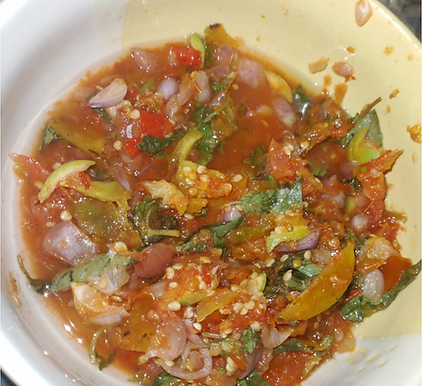
Basil sambal with lime juice
In addition, dishes made from moringa leaves are also a common part of everyday meals. The leaves are cooked in simple ways yet offer rich flavor and nutrition, reflecting how communities directly utilize the product from their gardens. The combination of sourness, piciness, and the fresh aroma of basil creates a harmony of flavors that reflects both the natural riceness and cultural heritage of the Sikka people.

Maringa leaf soup with sweet corn and carrots
Conclusion
This layered garden structure created a natural balance. Various plants grow together and compliment one another from fruits, such as mango, papaya, banana, and sugar apple; protein sources from Wuek and Wewe; to carbohydrates from maize, taro, and cassava. Culinary herbs and vegetables such as, basil, bird's eye chili, lime, moringa leaves, and temulawak also play an important role in daily life.
Although these gardens may appear simple, they actually embody deep ecological knowledge. Through mixed gardens, communities not only maintain food security but also nuture the relationship between people, the soil, and nature a relationship that has been passed down from generation to generation.