

Author: Marissa Ananias
Molang and Wa'an Padu: Traditional Skincare from Maumere
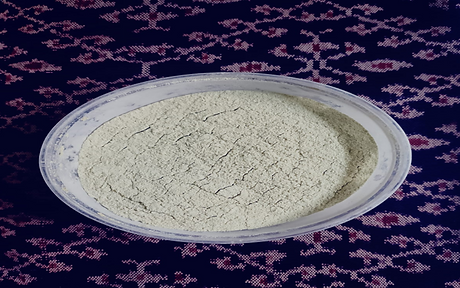
Molang is a term used to refer to a traditional cooling powder from Maumere
Molang is a traditional cooling powder known among the people of Maumere and has been used for generations. This treatment is made from natural ingredients sourced from the wild and local gardens.
For beauty purposes, molang is generally prepared from rice mixed with ingredients such as turmeric or yam bean. This mixture is used to help maintain the skin, leaving it smoother and refreshed
Beyond skincare, molang is also used as part of traditional external remedies. In this mixture becomes more diverse, with additional ingredients such as aromatic ginger (kencur) leaves, cogon grass root, as well as other local plants like menirang and wa'an padu

Wa'an padu is the local name of a traditional plant used as an ingredient in Molang, which is believed by the local community to help relieve internal heat and fever
Wa'an padu is a local term used by the community, and to this day, its equivalent name in Indonesian or English remains unknown. It has been traditionally used in loal healing pratices, particularly to help relieve internal heat and fever.
The process of making molang remains entirely traditional. Rice is first soaked for approximately one day, then pounded together with the other ingredients until finely ground. The mixture is then sun dried until completely dry. After drying it is pounded again and sieved to produce a fine powder like texture.
For use, molang is mixed with water to form a paste and applied to various parts of the body such as the face, hands, feet, neck, and stomach. In certain traditional practices, it is also applied to the forehead, especially in specific conditions o provide a cooling sensation that helps relive discomfort such as dizziness.
As a traditional heritage, molang reflects how local communities utilize natural resources for body care and health. To this day, this practice continues to be preserved as part of local wisdom passed down from generation to generation.